
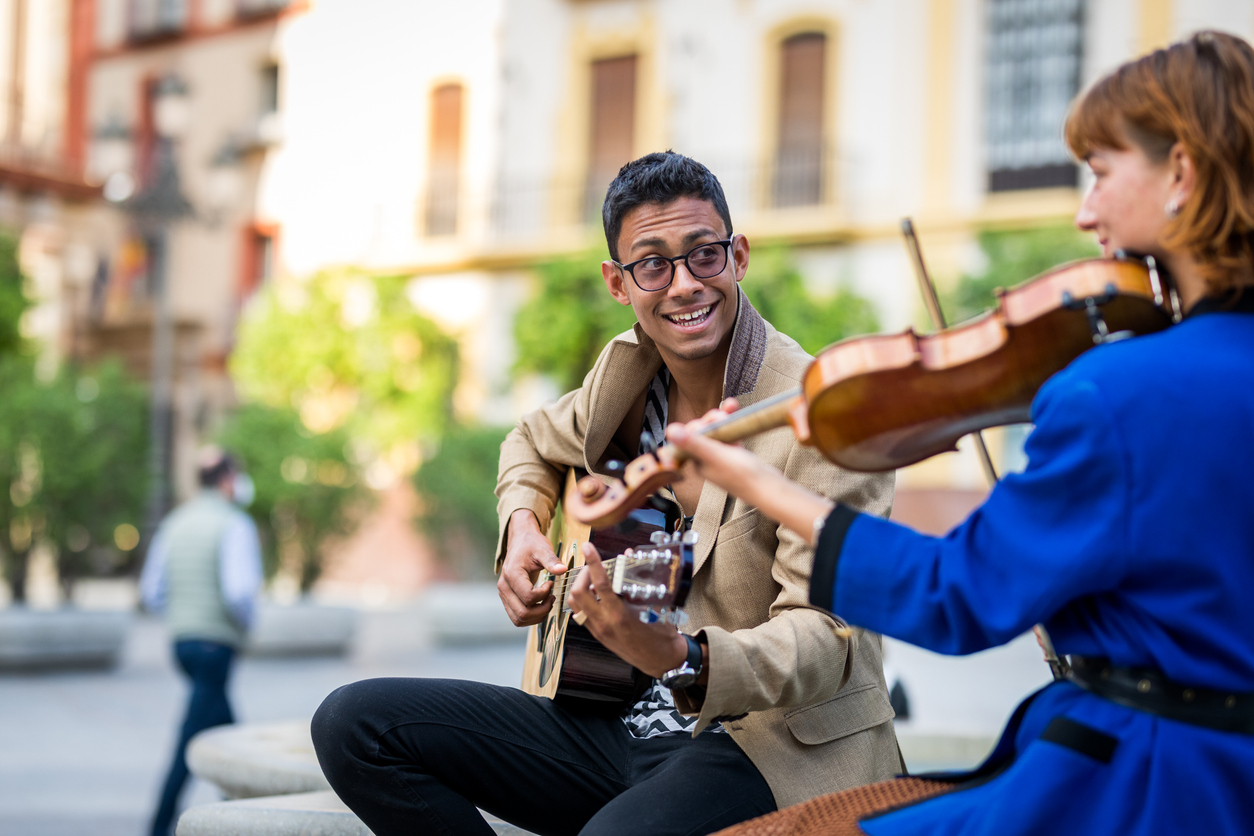
For many musicians, the idea of performing on the street holds a certain romance. Picture an open-air stage, spontaneous audiences, and the chance to share music with people who might not otherwise step into a concert hall.
Busking has long been a way for artists to earn money, practice live performance, and connect directly with listeners. But is it actually worth it? Before you grab your violin case and head to a busy corner, it helps to understand what busking involves and how to make the experience both rewarding and successful.
What Is Busking?
Busking is the act of performing music or other entertainment in public places for voluntary donations. Street musicians typically perform in high-traffic areas such as sidewalks, plazas, parks, subway stations, or popular tourist destinations.
Street performances rely on spontaneous audiences. People may stop to listen for a moment and leave a tip if they enjoy your performance. You can use an open instrument case, tip jar, or digital payment like a Venmo QR code to collect these donations.
While busking, you can test new songs, promote upcoming shows, or simply reconnect with audiences in a more casual setting. For violinists in particular, busking can be a powerful way to refine your performance skills and build confidence playing live for new listeners.
Is Busking Illegal?
Busking itself is not illegal in most places, but regulations can vary based on your city or location. Some cities allow street performance freely as long as you follow basic public safety. Others have more guardrails in place.

Before performing, you need to research local rules. Common regulations may include:
- Permits or licenses: Some cities require buskers to apply for a permit.
- Noise restrictions: Amplified sound may be limited or banned.
- Designated performance zones: Certain areas may be reserved specifically for street performers.
- Time limits: Some locations restrict how long you can perform in one spot or how early/ late you can play.
Can You Busk Anywhere?
In general, you can’t simply set up your instrument and busk wherever you want. Private property, building entrances, narrow sidewalks, and areas that block pedestrian traffic are typically off-limits. Check local guidelines ahead of time to avoid fines and make sure your performance is welcome rather than disruptive.
How Much Does a Street Musician Make While Busking?
What you can earn while busking varies depending on several factors. Some street musicians may earn just a few dollars per hour in quiet areas, while performers in busy tourist destinations or major cities can walk away with a few hundred dollars after a solid performance.
Festivals, weekend crowds, and popular spots often lead to the biggest payouts. For violinists and string players, unique arrangements or recognizable tunes often draw more listeners (and tippers).
It’s important to remember that busking income is rarely predictable. Weather, foot traffic, and local events can all influence how much you earn on a given day. Busking is more about gaining exposure and practicing performing than it is about earning a reliable income.
Pros and Cons of Busking
Like any performance opportunity, busking comes with advantages and challenges.
Pros
- Real-world performance experience: Busking forces you to perform confidently in front of strangers, helping you develop stage presence and adaptability.
- Direct audience connection: You can interact with audience members in real time to see which pieces resonate.
- Potential income: While inconsistent, busking can generate tips that support your music career or travel.
- Exposure and networking: Event planners, venue owners, or fellow musicians may stumble across your performance. Some buskers have landed gigs or collaborations through street performances.
- Creative freedom: You can experiment with repertoire and style without the pressure or boundaries of a formal concert program.
Cons
- Unpredictable income: You have no earnings guarantee, especially in slower locations.
- Weather challenges: Heat, cold, wind, and humidity can affect both you and your instrument.
- Competition for space: Other performers may have already staked their claim on popular busking spots.
- Physical demands: Standing for long periods and playing outdoors can be tiring.
Understanding these trade-offs can help you decide whether busking fits your musical goals and lifestyle.
Busking Tips and Tricks
If you’re considering street performance as a violinist or string player, a few strategies can make a big difference.
Choose the Right Location
Look for areas with steady foot traffic but enough space for people to pause without blocking walkways. Parks, plazas, and tourist areas are often your best bet.
Play Recognizable Music
Familiar songs tend to capture attention quickly. Try to focus more on film scores, pop covers, and classical favorites to attract a bigger audience.
Create an Inviting Setup
An open case or clearly visible tip jar signals that donations are welcome. You can also include a small sign with your name and social media handle or have business cards for people to grab.
Engage Your Audience
Eye contact, a smile, or a brief thank-you after a tip can encourage more interaction and support.
Be Prepared for Outdoor Conditions
Wind, temperature changes, and humidity can affect your instrument and bow. Reliable equipment designed to withstand different environments can help you maintain a great performance.
Stay Consistent
Like any performance skill, busking improves with practice. The more you play, the more comfortable and confident you’ll become.
Stand Out Wherever You Perform with CodaBow
If you’re ready to take your playing beyond the stage, busking can be an incredible way to connect with audiences and grow as a performer. For musicians who play anywhere — indoors or out — durability and stability matter. CodaBow’s carbon fiber bows are built to withstand temperature changes, humidity, and travel demands, giving you the freedom to perform confidently wherever your art takes you. Explore the collection to find the bow that performs as reliably as you do.


