
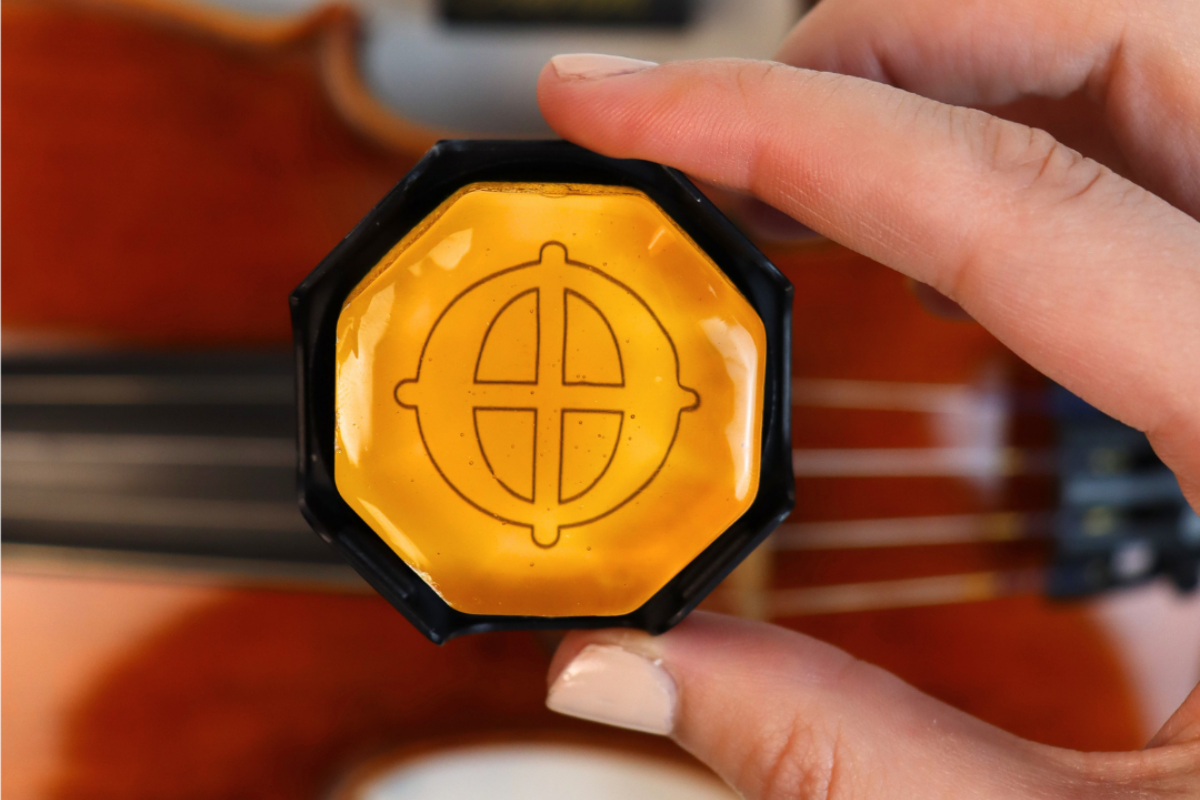
Rosin, or “violin wax,” may seem like a simple accessory, but it plays a major role in your sound and overall playing experience. Over time, even high-quality rosin can dry out, harden, crack, or lose its grip, leading to scratchy tone and inconsistent performance. In this guide, we’ll cover whether rosin goes bad, how to tell when it’s time to replace it, and what you can do to help your rosin last longer.
Does Rosin Go Bad?
Yes, rosin can “go bad,” but it doesn’t expire in the traditional sense, where you have to worry about rotting or molding. For violin and other string instrument players, “bad” rosin simply becomes less effective and harder to use.
What Is Violin Rosin Made Of?
Rosin is made from the hardened resin of trees, like pines and conifers. Rosin is basically purified tree sap that’s been heated to remove its liquid components, leaving a solid, sticky substance. Different processes and formulations can create different types of rosin, namely dark and light rosins.
Rosin’s ingredients play a role in how it ages. Natural resins and additives can be sensitive to air, heat, humidity, and oxidation, which can affect your rosin’s consistency. Pine resin oxidizes over time, making the rosin more brittle and less sticky. Older rosin can reduce the grip on your violin bow hair.
You also have to consider how different environments can affect rosin. Since rosin comes from trees, it behaves similarly to other natural materials. It can soften or melt in heat (avoid leaving it in your car during the summer!) or crack in extreme cold.
Why “Fresh” Rosin Can Make a Difference
Fresh rosin sits at the sweet spot between sticky and slippery, which allows for consistent friction between the bow hair and string. When you have fresh rosin, it tends to transfer to the bow hair more easily, create a consistent grip, produce a cleaner sound, and flake less.

Keep in mind that “fresh” doesn’t necessarily mean you just took it out of the package. A rosin cake can still be fresh a year or two from now as long as it’s stored properly and cared for.
Signs You May Need to Replace Your Rosin
A cake of rosin can technically last for years, but it might become noticeably worse to play with over time. You may want to consider replacing your rosin if you notice any of these signs:
1. It becomes very hard and glassy and won’t transfer to the bow hair well
As rosin ages and oxidizes, its surface can harden into a smooth, almost polished layer. Instead of your bow hair picking up fine particles of rosin, the hair simply slides across the surface with very little transfer.
You may notice you need many more passes on the cake to get any grip at all, and your bow may feel slippery on the strings.
2. It crumbles or cracks apart easily
Old or improperly stored rosin can lose flexibility and become brittle. Exposure to cold temperatures, dryness, or repeated temperature swings weakens the resin’s structure. Small edge chips may appear first, followed by visible cracks across the cake. Eventually, the rosin may break into pieces during normal use or if dropped lightly.
You should consider replacing brittle or broken rosin, as it tends to flake and apply unevenly, resulting in an uneven, inconsistent coating.
3. It feels sticky or gummy from heat exposure
If you leave rosin in a hot car, near a window, or inside a warm case for long periods, it may become tacky or almost syrupy on the surface as the heat softens the resin and waxes inside. Rosin that’s become too warm can overload the bow hair and create a grabby, uneven response. Gummy rosin may also smear onto the strings more easily, attract dirt and dust, making the bow feel sluggish or overly resistant during playing.
4. Your violin’s sound becomes weak, scratchy, or inconsistent even after applying rosin
Because rosin controls the friction between bow hair and string, one of the clearest signs it’s degraded is a noticeable decline in sound quality. Old rosin may fail to grip properly, causing thin tone, delayed response, or difficulty starting notes cleanly. In other cases, uneven application can create scratchiness, random surface noise, or inconsistent articulation from one stroke to the next.
Players may keep adding rosin, hoping to fix the issue, but the underlying problem is that the rosin itself is no longer functioning properly.
5. It collects excessive dust or leaves too much residue on the strings
As rosin degrades, it can break down into finer, drier particles that shed excessively during playing. This creates heavy rosin dust on the strings, the fingerboard, and the instrument’s top. Excess buildup on the strings can dampen vibration, reduce tone quality, and make the strings feel rough under the bow.
Excessive dusting may indicate the rosin has become too dry or brittle, while smeary residue often points to heat damage or over-softening.
Professional players may replace their rosin as often as every year. But for most players, you only need to replace it once you notice a change in its performance. If you run the bow across the rosin several times and almost nothing transfers to the bow hair, the rosin is probably too old or dried out.
Tips for Helping Your Rosin Last Longer
- Keep rosin in its cloth or case. The cloth or protective case helps shield rosin from dust, dirt, moisture, and accidental impacts.
- Store rosin at room temperature. Rosin performs best when kept in a stable environment with mild temperatures. Extreme heat can soften or warp it, while cold temperatures can make it brittle and prone to cracking.
- Don’t leave rosin in a hot car or on a windowsill. Direct sunlight and trapped heat can quickly damage rosin. If too warm, rosin may soften, sweat oils, become sticky, or even partially melt.
- Don’t touch the rosin’s surface. Oils and moisture from your fingers can transfer onto the rosin and create slick spots or contamination on the surface. Over time, this can interfere with how evenly the rosin applies to the bow.
Keep Your Bow Setup Performing at Its Best with CodaBow
While fresh rosin helps maximize grip and clarity, the bow itself plays an even bigger role in your overall sound. CodaBow performance bows are designed for consistency, responsiveness, and durability to help you get the most from every stroke. Explore our lineup of bows and shop replacement rosin today


