
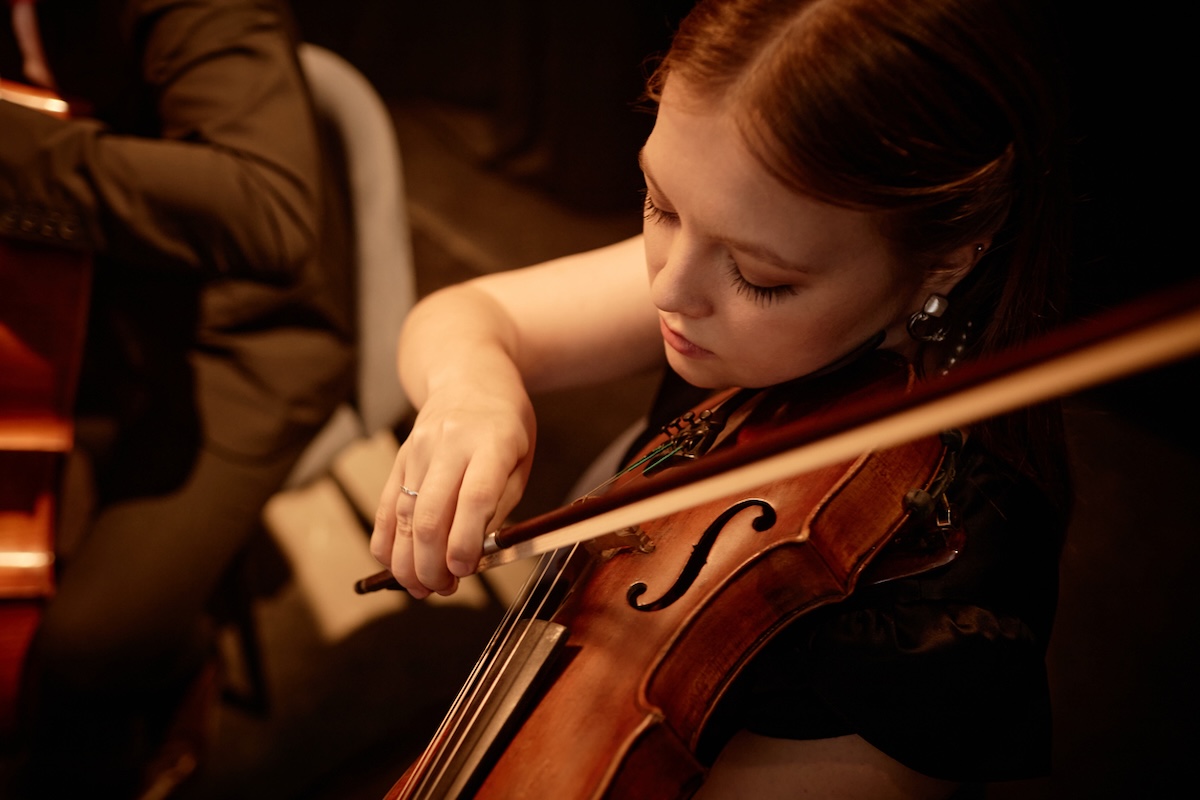
A concertmaster is the lead first violinist in an orchestra. They’re the orchestra’s top-ranking player after the conductor and play a major leadership role, and their responsibilities include everything from tuning the orchestra to playing solos.
In this guide, we cover the responsibilities of an orchestra concertmaster and how aspiring concertmasters can work their way toward the role.
What Does a Concertmaster Do?
The concertmaster is a key part of an orchestra’s leadership and helps translate the conductor’s vision into a clean performance. Here are some of a concertmaster’s usual responsibilities:
Leading the first violins
The concertmaster is the principal player of the first violin section. They set the tone for how the section plays, including things like articulation, phrasing, energy, and timing. First violinists often watch the concertmaster to stay together.
Tuning the orchestra
Before a concert or rehearsal starts, the concertmaster usually walks on stage and leads the orchestra through tuning. While this tradition is practical (everyone needs to be in the same tune), it also signals that the performance is about to begin.
Playing orchestral solos
Many orchestral works include important violin solos that are not full concerto solos. Examples might include lyrical passages, short cadenzas, or featured moments in symphonies, ballets, operas, and film scores. The concertmaster usually plays these.

Choosing and coordinating bowings
One of the concertmaster’s biggest behind-the-scenes responsibilities is deciding bowings (whether string players use an up-bow or down-bow) for specific passages. Matching bowings help unify the string section visually and musically.
Communicating the conductor’s style
The conductor offers a broad interpretation, but the concertmaster helps make it actually playable for the strings. The concertmaster may help the section adjust bow speed, pressure, articulation, or vibrato to meet the conductor’s requests.
Acting as a liaison
In some orchestras, the concertmaster serves as a bridge between the conductor and players. They may share players’ concerns, help solve rehearsal issues, or represent the orchestra in artistic discussions.
Representing the orchestra
The concertmaster is a highly visible role both on and off the stage. They may shake the conductor’s hand, take solo bows, appear at donor events, or represent the orchestra in other public-facing ways. Since they sit at the front and are often introduced separately, the concertmaster is seen as one of the ensemble’s leaders.
How Do You Become a Concertmaster?
To become a concertmaster, you need to be the best player technically while also being able to guide other musicians. If this performance path interests you, here’s what to focus on:
Become a strong violinist
Concertmasters are usually among the most advanced violinists in the orchestra. You’ll need excellent technical skills and the ability to play confidently under pressure. This includes deep knowledge of orchestral repertoire, extensive experience performing solos, and strong interpersonal skills.
Learn how an orchestra works
Gain experience playing in as many ensembles as you can. Every ensemble counts, including school orchestras, youth orchestras, community orchestras, chamber groups, summer programs, and pit orchestras. Pay attention to how different roles play individually and together in each of these settings.
Practice leading from your chair
Concertmasters lead with subtle body language. You should practice giving clear entrances, breathing before phrases, moving with confidence, and playing in a way that’s easy for others to follow.
Build communication skills
You may need to give feedback, ask questions in rehearsal, talk with the conductor, and help other string players feel confident. A good concertmaster is calm and collaborative when communicating with other members.
Find a good teacher or mentor
A private violin instructor, orchestra director, or current concertmaster can help you build and strengthen the right skills. Ask them for direct feedback on relevant skills, such as leadership, orchestral excerpts, bowing, and audition prep.
Audition for leadership roles
You can’t jump straight into being a concertmaster. Start with realistic opportunities like section leader, principal second violin, or assistant concertmaster. A concertmaster in a school, youth, or community orchestra can also be a good stepping stone.
All these roles will help you learn how to lead confidently and effectively.
Be dependable
Concertmasters are expected to show up prepared, know the music, stay focused, and model professionalism. They are often the first players to show up and the last to leave. The conductor and other musicians need to trust that you’re ready and committed to the role.
The Path to Becoming a Concertmaster
Not every concertmaster follows the same trajectory. However, a reasonable goal path may look like:
- Private study
- School or youth orchestra
- Section leader roles
- Chamber music
- Advanced orchestral excerpts
- Assistant concertmaster or concertmaster auditions
Take the Next Step in Your Career with CodaBow
From the concertmaster’s chair to the back of the second violin section, every orchestral musician needs a bow that delivers responsiveness, projection, and consistency night after night. Explore CodaBow’s professional and master series bows, which are trusted by orchestra musicians around the world, and find your perfect match today.


